Oman Petroleum & Energy Show 2026: A Hydrocarbon Economy Designing a Balanced Energy Future
A founder's briefing from OPES and Oman Sustainability Week, Muscat
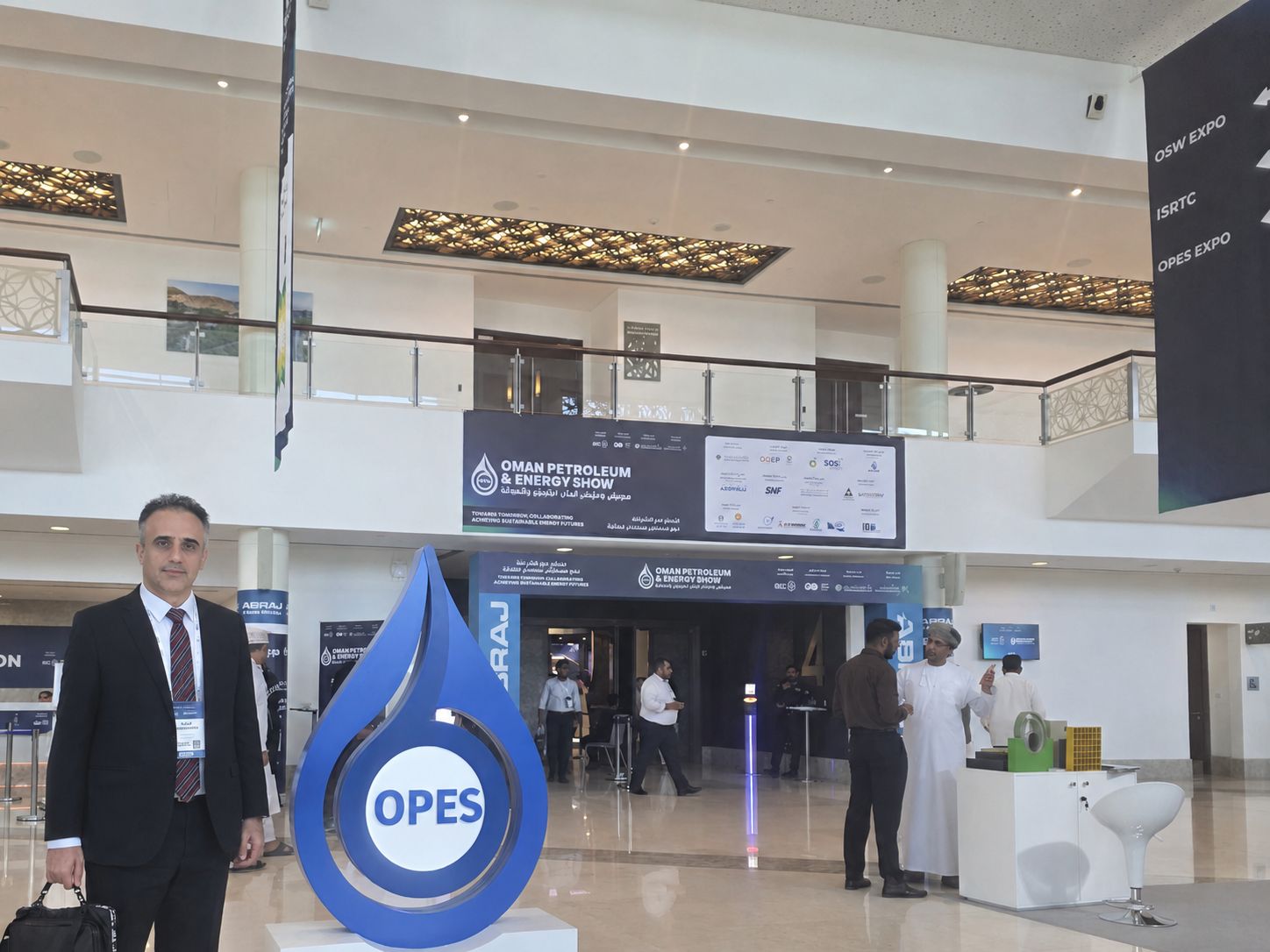
I spent time on the floor at the Oman Petroleum & Energy Show 2026, held from 18 to 20 May at the Oman Convention & Exhibition Centre in Muscat. I went two weeks after visiting Make it in the Emirates in Abu Dhabi, and the contrast was useful. One event was about building an industrial base. This one was about an energy economy deciding how it wants to grow over the next twenty-five years.
The most important detail at OPES 2026 was not on any single stand. It was the fact that the show ran co-located, for the second year, with Oman Sustainability Week. Oman’s premier oil and gas exhibition and its premier sustainability platform now sit under one roof. That is a deliberate choice, and it tells you how Oman wants to be read. Not as a hydrocarbon economy resisting change, and not as a country walking away from oil and gas, but as one trying to hold both in a single strategy.
My main takeaway
Reading the floor and the sessions together, one message stood out. Oman is not treating the energy transition as a separate track that runs alongside the oil and gas business. It is trying to make them the same conversation. The Minister of Energy and Minerals framed it directly in the opening keynote: a balanced energy future, one that uses Oman’s hydrocarbon strengths to fund and build the cleaner system that follows.
That framing matters because it sets the order of work. Oil and gas revenue is the engine. Sustainability is the destination. And the bridge between them, the thing that decides how fast and how efficiently Oman can travel, is operational capability: data, automation, and applied AI.
Oman is not choosing between hydrocarbons and the transition. It is using one to build the other, and the bridge between them is operational capability.
1. Oman’s oil and gas industry, in brief
For readers who do not follow Gulf energy closely, Oman is easy to overlook next to its larger neighbours. It should not be. Oman is a mid-sized but strategically significant producer, and oil and gas still account for roughly 30 percent of its GDP and close to 70 percent of government revenue. The sector is not a legacy business in Oman. It is the financial foundation of everything else the country is trying to do, including the transition.
A few facts give the shape of it. Oman produces about one million barrels of crude oil and condensate a day. It is not an OPEC member, but it takes part in the wider OPEC+ alliance and aligns its output with those commitments. Natural gas does the quieter heavy lifting. It fuels around 94 percent of Oman’s electricity, and tight-gas development at Block 61, one of the largest projects of its kind in the Middle East, underpins both domestic power and LNG exports.
What makes Oman genuinely interesting is the nature of its fields. Much of its oil sits in mature, geologically complex reservoirs in the interior, fields that have been producing since the 1960s. Keeping them flowing has made Oman one of the world’s more serious users of enhanced oil recovery, including polymer flooding and solar-powered steam. Oman has had to be technically inventive simply to hold production steady. On the coast, the port of Duqm gives Oman something its Gulf neighbours do not have: a deep-water industrial hub on the Arabian Sea, outside the Strait of Hormuz, with refining and petrochemical capacity built around it.
This is the industry that OPES exists to serve, and it is in reasonable health. But the people running it are clear-eyed. The long-term oil demand window is narrowing, and mature fields cost more to produce from every year. That pressure is what makes the next two themes urgent rather than optional.
2. Sustainability has moved to the centre of the conversation
A few years ago, sustainability at an event like this would have been a side hall. At OPES 2026 it was the co-headline. The co-location with Oman Sustainability Week is the visible proof, but the substance behind it is what matters.
Oman has committed to net zero by 2050. In the days around OPES, the Ministry of Energy and Minerals set out an updated net-zero strategy and a carbon market framework, which moves the target from an announcement toward an operating plan. Alongside the headline carbon goal, the country is pursuing broader energy access by 2030 and improvements in emissions and air quality. Net zero, in Oman’s framing, is not only a climate commitment. It is also a public health and energy security agenda.
The numbers behind the ambition are large. Renewable energy supplied around 9 percent of Oman’s electricity last year, helped by the Manah 1 and Manah 2 solar plants, which add a combined gigawatt of capacity. National plans aim to lift renewables to roughly 30 percent of the electricity mix by 2030. Green hydrogen is the bigger bet. Through Hydrogen Oman, the country is targeting around one million tonnes of renewable hydrogen a year by 2030, scaling toward seven to eight million tonnes by 2050. The International Energy Agency has assessed that this would make Oman the largest hydrogen exporter in the Middle East, and the sixth largest in the world, by 2030.
Capital is lining up behind the plan. Oman expects clean-energy investment to exceed USD 140 billion by 2050. Specific projects are already moving, including a multi-billion-dollar green hydrogen development at Duqm and a carbon capture and storage pilot run by Petroleum Development Oman. The transition is being framed as an economic story, not only an environmental one, with renewables and hydrogen projected to create tens of thousands of jobs over the coming decades.
The honest caveat is that ambition and delivery are different things. A 2050 target depends on twenty-five years of consistent execution. But the direction is set, the policy scaffolding is going up, and the capital is committed. For an energy economy of Oman’s size, that is a serious position to be starting from.
3. Data, AI, and automation: visible, but early
OPES 2026 had a dedicated Digital Oil & Gas Zone, a space given over to AI, data analytics, and automation. Its presence is a signal in itself. A few years ago, digital would not have had its own zone at an Omani energy show.
That said, I want to be honest about what I saw. The Digital Oil & Gas Zone, and the digital sessions across the programme, confirmed that AI and digital transformation still have a long journey ahead before they play a defining role in Oman’s oil and gas industry. The interest is real. The maturity is early. The conversation is still closer to “where could AI help” than to “here is how AI runs this asset”.
That is not a criticism of Oman in particular. It is the normal state of the industry. And there is real work to point to. Petroleum Development Oman has partnered to deploy an enterprise, AI-powered digital twin across its operations. It uses drones for pipeline inspection and monitoring, has digitised tens of thousands of asset records, and uses edge computing at wellheads to cut data costs. Across the wider sector, digital twins have measurably reduced unplanned downtime, and drone-based inspection has cut the cost of pipeline and facility checks.
There is one connection worth drawing out, because it links this theme directly to the last one. Automated drones and computer vision inspection are not only an efficiency story. They support Oman’s net-zero mandate directly. They reduce the emissions associated with manned inspection trips, they limit the physical risk of putting people on remote and hazardous sites, and they catch leaks, flaring, and equipment faults earlier, which keeps facilities running cleaner. In an industry where methane and operational emissions are under increasing scrutiny, automated inspection is one of the clearest examples of digital capability and sustainability being the same investment.
The gap, and it is the gap Zanor AI watches most closely, is between adoption and maturity. Oman’s oil and gas sector has pockets of advanced practice, mostly inside its largest operators. What it does not yet have is AI as an industry-wide operating capability: embedded in daily decisions, owned by internal teams, governed, and sustained after the vendor leaves. Closing that gap is not a technology problem. It is an operating model and capability problem.
What this means for Zanor AI
OPES 2026 reinforced the thesis Zanor AI was built on. The energy transition will be delivered, or delayed, by operational capability. Oman has the strategy, the targets, and the capital. The constraint over the next decade will be execution: integrating data, automation, and AI into how assets are actually run.
For a specialist AI firm focused on energy and industrial enterprises, that is a clear and durable opportunity. Not isolated pilots in a digital zone, but the harder work of helping operators move from AI pilots to AI-native operations, with strong governance, real domain understanding, and measurable business outcomes. The same message held in Abu Dhabi two weeks earlier and in Muscat. The technology is available. The differentiator is the organisation’s ability to absorb it, run it, and evolve it.
Founder reflection
OPES 2026 was a smaller and more focused event than ADIPEC, the world’s largest international energy exhibition in Abu Dhabi that I know well from previous years. That suited it. It felt less like a showcase and more like a working conversation about a specific country’s specific energy future.
Two events in two weeks, in two Gulf countries, left me with the same impression. The region is past the stage of debating whether to change. The UAE is industrialising its economy and embedding AI into it. Oman is using its hydrocarbon strength to fund a genuine transition. Both are now in the execution phase, and execution is where capability, not ambition, decides the outcome.
Closing thought
Oman’s plan is coherent. Use the oil and gas business, while it is strong, to build the renewable, hydrogen, and low-carbon economy that comes next. The targets are set and the money is committed. What will decide the pace is the unglamorous layer in the middle: data, automation, and applied AI, embedded in operations and owned by the people who run them.